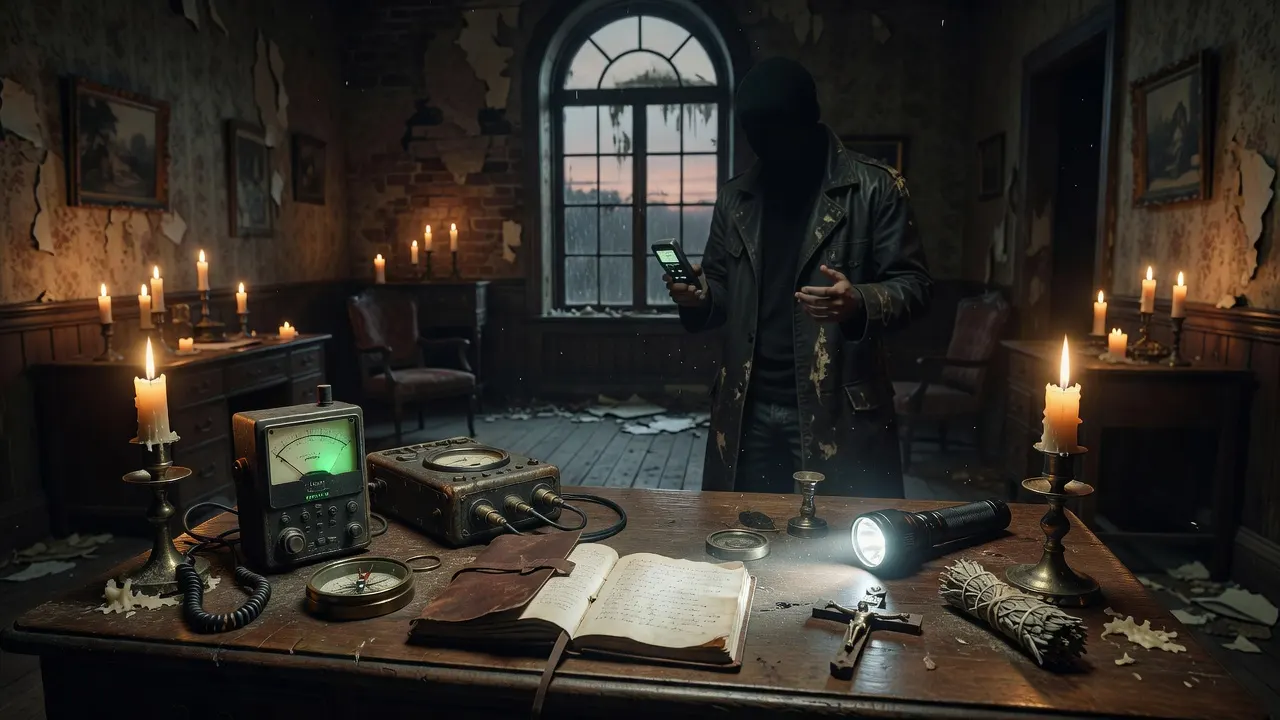
Start with practical tools that help you move safely, record observations and keep notes. A torch, camera, notebook and voice recorder can support a structured investigation; specialist meters are optional, not proof of a haunting. Plan your visit, respect the place and its occupants, and use equipment to document observations rather than promise answers. [F9] [F4] [F13]
Key facts
- Everyday starting tools include flashlights, cameras and notebooks; specialist options include EMF meters, digital voice recorders and infrared cameras. [F9]
- Equipment can help turn personal experiences into structured research and support measurable observations. [F4] [F6]
- Sophisticated ghost-hunting equipment cannot guarantee a supernatural encounter. [F13]
Build a simple kit around safety and clear records
Choose equipment for specific tasks, not for its dramatic appearance. A torch helps you move through darkness; a camera can document what you see; a notebook lets you record observations in your own words. A voice recorder can capture sound for later review. These everyday items appear alongside specialist tools in beginner equipment guidance. [F9]
Keep your kit manageable. You can begin without costly specialist equipment, so avoid treating a long shopping list as a requirement for a first investigation. [F10] Pick tools you understand and can use without losing attention to your surroundings. A device you cannot operate confidently adds little to your notes.
Make safety the reason for carrying a light, not merely a way to create atmosphere. The checklist source specifically recommends a reliable flashlight for moving safely in dark areas, even when you are not recording. [F16] Use it when you need to see where you are going. Do not let filming become more important than moving carefully.
Before you leave, make sure each item has a job: navigation, recording or note-taking. This simple test helps you leave distractions behind. Keep your notes and recordings organised so you can compare what you experienced with what the equipment captured. Equipment can support structured research and measurable observations, rather than relying only on personal perception. [F4] [F6]
Treat specialist readings as observations, not proof
An electromagnetic field (EMF) meter is a recognisable specialist tool in paranormal investigation. [F21] Its presence in a kit does not make a reading an explanation. Record what the device displays and the circumstances in which you noticed it. Keep your interpretation separate from the observation, so a number on a screen does not become a claim by itself.
Other specialist choices include infrared cameras, while digital voice recorders offer another way to document sound. [F9] Consider whether you have a clear reason to use each tool before adding it. More equipment can mean more material to review, but it does not guarantee that the material will answer your question.
Approach unusual results with both an open mind and scepticism. Paranormal Down Under recommends balancing those qualities and relying on intuition as well as data. [F7] In practice, note what you felt, then describe what the equipment recorded without merging the two. This keeps personal experience visible without presenting it as a measurement.
Do not promise yourself or anyone else that a device will find something supernatural. A checklist guide warns that even sophisticated equipment cannot guarantee an encounter. [F13] Your aim can be careful documentation, even if the result is ordinary or inconclusive. That is more useful than forcing a dramatic explanation onto an unclear recording.
What this means for you?
A first investigation does not need to look like a professional production. Start with a small set of tools you can use calmly: a light for movement, a camera or recorder for documentation, and a notebook for observations. These are among the everyday and specialist equipment options listed for aspiring investigators. [F9] You can decide later whether a specialist meter serves a real purpose for your approach.
If you are a beginner visiting a place where people have reported unexplained activity, plan what you want to observe before you begin. Write down what you notice in plain language, and keep your impressions distinct from any device readings. This is a practical way to make an experience more structured, rather than relying on memory alone. Equipment can help transform personal experiences into structured research. [F4]
Respect the place and the people connected to it. Responsible and respectful practice is part of the purpose of appropriate equipment, alongside physical protection. [F8] Keep your approach measured, and do not let curiosity push you into careless behaviour. When a session yields no clear result, your notes can still show what you checked and what you experienced.
What to do now?
- Choose a small kit. Select a light, a camera or voice recorder, and a notebook according to the tasks you want to handle. These items appear in beginner equipment guidance. [F9] Keep specialist equipment optional; you do not need to spend a fortune to start. [F10]
- Check each tool. Before setting out, practise using your chosen equipment so it does not distract you when you need to pay attention. Write a simple note beside each item explaining its purpose.
- Plan your observations. Decide what you want to document, and leave room in your notes for impressions and device results as separate entries. Equipment can support measurable observations and structured research. [F4] [F6]
- Use light for safe movement. Carry a reliable flashlight for handling dark areas, even if you do not plan to record. [F16] Keep your attention on where you are going.
- Review without overclaiming. Label what you recorded and what you inferred. Stay open-minded while weighing data, and remember that equipment cannot promise a supernatural encounter. [F7] [F13]
Sources
- spectresphere.com/complete-ghost-hunting-equipment-checklist
- paranormaldownunder.com/essential-paranormal-equipment-for-beginner-investigators/equipment
- hauntgears.com/paranormal-investigation-equipment
About this page
Written with AI assistance from the sources listed above, then checked by automated fact, source, repetition and quality checks before publishing.
Facts and links checked on 4 November 2026. Summarises the sources linked above; check the linked source for the latest version.
How we researched this: we compiled this guide from the official and independent sources listed above, and checked the facts on the date shown. Our editorial policy explains how we choose and check sources.