The history of England's lost colony on Roanoke Island: the 1587 settlement, Virginia Dare, John White's delayed return, the word 'CROATOAN', the leading theories, and what archaeologists have found.
In 1587, more than 100 English men, women and children settled on Roanoke Island, off what is now North Carolina. Three years later, they had vanished, leaving behind a single carved word. The "Lost Colony" remains one of early American history's great puzzles.
Earlier attempts
Sir Walter Raleigh had a royal charter from Elizabeth I to colonise North America. A first expedition, which included the artist John White and the scientist Thomas Harriot, built a military outpost on Roanoke in 1585, but relations with local Algonquian peoples broke down and the settlers returned to England in 1586.
The 1587 colony
The 1587 colonists, led by John White as governor, included families, intending to settle permanently. They had planned to settle near Chesapeake Bay, but ended up on Roanoke. On 18 August 1587, White's granddaughter, Virginia Dare, was born: the first child born to English parents in the Americas.
Supplies were short, and the colonists persuaded White to return to England for help. He left later that year.
The delayed return
White arrived home as war with Spain was escalating. With the Spanish Armada threatening in 1588, ships were needed for England's defence, and his attempts to return failed. He didn't reach Roanoke again until August 1590.
What White found?
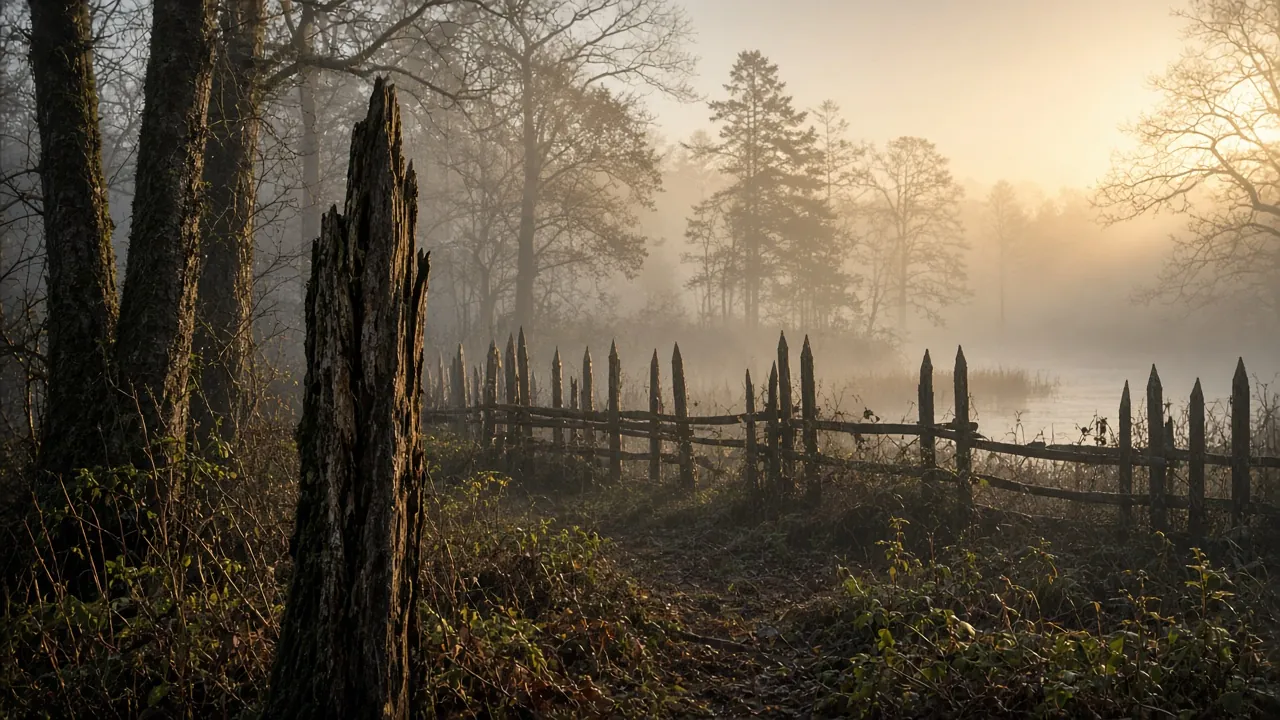
The settlement was deserted, and the houses had been taken down, suggesting an orderly departure rather than a hurried escape. A palisade had been built. The word "CROATOAN" was carved on a post, and "CRO" on a tree.
White had agreed with the colonists that if they left, they would carve their destination, adding a cross if they were in distress. There was no cross. Croatoan was the name of an island to the south, now part of Hatteras Island, home to people friendly to the English. Storms and his crew's reluctance prevented White from searching there, and he never saw his family again.
The main theories
- Assimilation: the colonists, or some of them, joined the Croatoan people or other communities. This is widely seen as the most plausible explanation.
- A move inland: some may have travelled to the mainland, perhaps towards Chesapeake Bay or to the area now called Bertie County.
- Conflict, disease or starvation: some may have died. Later reports from Jamestown colonists, of uncertain reliability, mentioned Europeans being killed by the Powhatan.
- Lost at sea: an attempt to sail home in a small boat may have failed.
More dramatic theories, involving Spanish attack or the supernatural, have little support.
What archaeology suggests?
Excavations on Hatteras Island have found European objects from around the right period, which some researchers see as evidence of colonists living with the Croatoan. On the mainland, the First Colony Foundation has investigated a site known as "Site X", identified partly from a hidden symbol on one of White's maps, and found pottery it believes may be linked to the colonists. These findings are debated, and no conclusive evidence has yet been found.
Why it matters?
The Lost Colony is often told as a ghost story, but its likely answer is a human one: people in a hard place relying on their neighbours. It's also a reminder that the story is about Native American communities as well as English settlers.
Today, the site is part of Fort Raleigh National Historic Site, run by the US National Park Service, where visitors can see the reconstructed earthworks and learn about the colony.
Sources and further reading
Facts checked on 20 October 2026. Spotted an error? Tell us and we will correct it.
Frequently asked questions
What should you know about Earlier attempts?
Sir Walter Raleigh had a royal charter from Elizabeth I to colonise North America.
What should you know about the 1587 colony?
The 1587 colonists, led by John White as governor, included families, intending to settle permanently. They had planned to settle near Chesapeake Bay, but ended up on Roanoke.
What should you know about the delayed return?
White arrived home as war with Spain was escalating. With the Spanish Armada threatening in 1588, ships were needed for England's defence, and his attempts to return failed.
What White found?
The settlement was deserted, and the houses had been taken down, suggesting an orderly departure rather than a hurried escape. A palisade had been built.