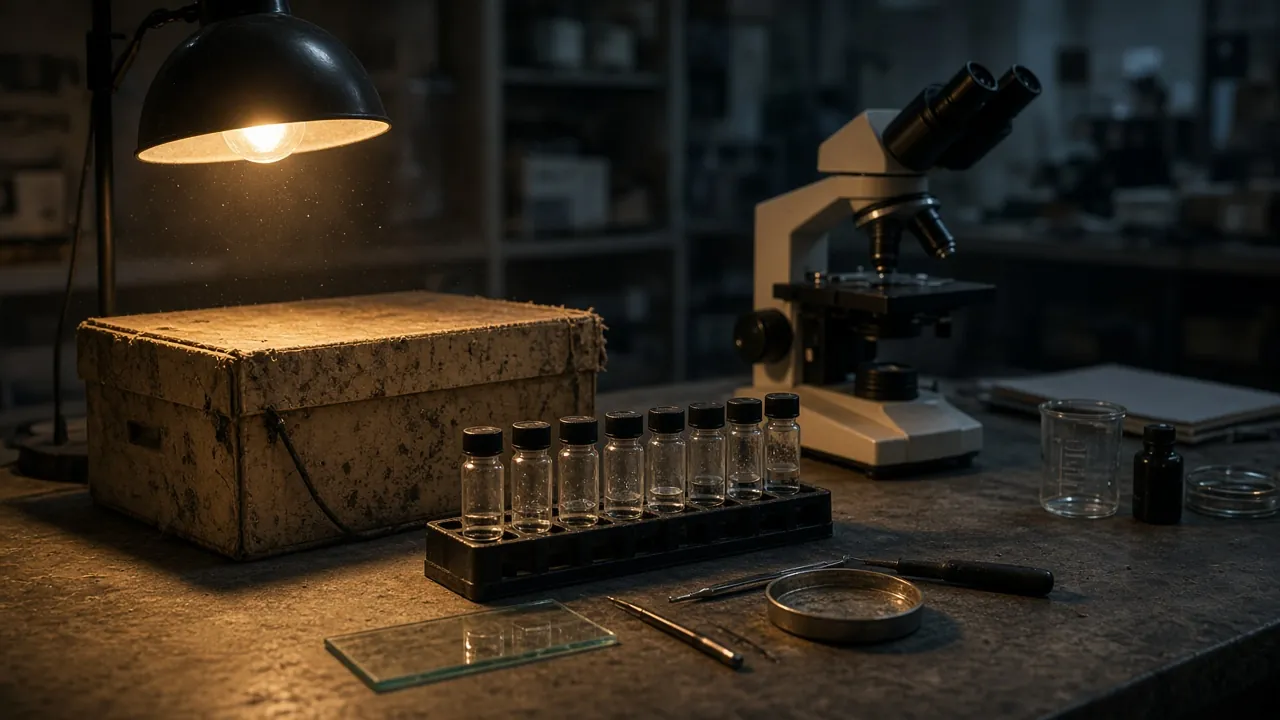
For decades, cold cases were defined by physical evidence locked away in cardboard boxes inside police evidence lockers. Yellowing handwritten case notes, degraded 35mm film negatives, and unidentified fingerprints on smudged glass stood as silent sentinels to crimes that time seemed destined to erase. Investigators who dedicated their careers to solving these mysteries frequently ran into dead ends when physical tips ran dry and witnesses passed away.
Today, we are witnessing a quiet revolution in cold case investigation. The intersection of modern digital forensics, multispectral image processing, high-throughput DNA sequencing, and open-source intelligence (OSINT) is reopening files that sat dormant for half a century. Cases once deemed unsolvable are finding closure in weeks, proving that while evidence degrades, technological capability compounds.
In this deep dive, I want to explore the exact technological methodologies that forensic genealogists and digital investigators use to decode historical mysteries, identify John and Jane Does, and bring long-delayed answers to light.
1. Investigative Genetic Genealogy: The GEDmatch Paradigm
No single technological advance has impacted cold case investigation more dramatically over the last eight years than Investigative Genetic Genealogy (IGG). Traditional law enforcement DNA databases (such as CODIS in the United States) rely on short tandem repeat (STR) markers. CODIS only finds a match if the perpetrator's exact DNA profile is already registered in the federal database due to a prior felony arrest or conviction.
IGG operates on an entirely different scientific mechanism using Single Nucleotide Polymorphism (SNP) array testing. Instead of looking for an exact 1:1 match, SNP analysis compares over 600,000 genetic markers across open consumer databases like GEDmatch and FamilyTreeDNA.
How the Kinship Distance Math Works: Human DNA is measured in centimorgans (cM). First cousins share roughly 850 cM of DNA, while third cousins share approximately 53 cM. When forensic genealogists upload an unidentified suspect's DNA profile to a database, they construct family trees backward to find common great-great-grandparents, narrowing down thousands of potential relatives to a single branch of a family tree.
This exact technique famously led to the identification and arrest of the Golden State Killer in 2018 after 40 years of cold silence, and it has since resolved over 500 previously unyielding homicide and unidentified person cases worldwide.
2. Multispectral Image Enhancement & OCR on Degrading Evidence
Physical evidence collection from the 1960s and 1970s often contains severely degraded documents: faded carbon-copy receipts, overwritten notebooks, or water-damaged letters. Human eyes reading under standard light bulbs miss critical text details that have faded past visible wavelengths.
Digital forensic laboratories now utilise **Multispectral Imaging (MSI)**. By illuminating historical evidence with narrow bands of light across the ultraviolet, visible, and infrared spectrums (from 350nm to 1050nm), forensic camera sensors isolate distinct ink chemical compositions.
Key Digital Imaging Techniques:
- Infrared Reflectance: Iron gall ink and synthetic ballpoint inks react differently under infrared illumination. If an individual attempted to redact or write over a phrase in a ledger, infrared sensors reveal the underlying original text clearly.
- Polynomial Texture Mapping (PTM): By capturing dozens of digital photographs from fixed spatial angles with varying light direction, PTM highlights micro-indentations left by pen pressure on paper pages beneath the top sheet.
- Neural Optical Character Recognition (OCR): Custom AI OCR models trained specifically on 19th and 20th-century cursive handwriting script scan thousands of digitized historical property records, newspaper archives, and shipping manifests in seconds.
3. Digital Audio Restoration & Photogrammetry Scene Reconstruction
Cold cases involving audio recordings—such as emergency 911 dispatch calls, wiretaps, or vintage micro-cassette dictator recordings—frequently suffer from heavy background hiss, tape stretch, and room reverberation. Early digital filtering often distorted speech harmonics, making words unintelligible.
Modern forensic audio engineers use **neural source separation**. By training machine learning models on human vocal tract acoustics, software isolates human speech frequencies from background tape noise, electrical hum, and wind interference without destroying subtle vocal inflection markers.
3D LiDAR Photogrammetry
When re-examining historic crime scenes, investigators construct 3D spatial models using vintage crime scene photographs. Using photogrammetry software, forensic analysts calibrate camera lens focal lengths from 50-year-old photos, matching spatial landmarks to contemporary high-resolution LiDAR laser scans of the location. This allows investigators to test line-of-sight claims, calculate exact bullet trajectories, and evaluate witness visibility with millimeter accuracy.
4. Open-Source Intelligence (OSINT) & Crowdsourced Archival Research
Beyond specialised government laboratories, the democratization of digital archives has unlocked unprecedented public research power. Digitized newspaper repositories (such as Chronicling America and British Newspaper Archive), cemetery databases (Find a Grave), and digitized census logs enable independent researchers to cross-reference historical data at scale.
Digital cold case communities operate under structured OSINT frameworks:
- Timeline Verification: Mapping historical city directory addresses against regional telephone books to verify individual residence windows.
- Vehicle Identification Archives: Cataloging historical license plate registration formats, chassis numbers, and regional paint codes to trace abandoned vehicles mentioned in old police blotters.
- Missing Persons Geolocation: Correlating unstructured missing person reports with unidentified remains records using spatial clustering algorithms.
Ethics in Digital Cold Case Investigation
As digital tools become more accessible, the boundary between public interest research and ethical responsibility becomes paramount. Responsible digital investigators adhere to strict ethical standards: respecting living family members, protecting victim privacy, verifying facts through official public records, and submitting valid findings directly to designated law enforcement cold case units rather than publishing unverified speculation.
The Road Ahead: Preserving Evidence for Tomorrow
The journey toward solving cold cases proves that no piece of evidence is truly silent. As sequencing costs drop and digital processing algorithms mature, historical cases that once appeared hopelessly lost are finally receiving the meticulous, objective investigation they deserve.
Technology does not replace traditional investigative police work; it empowers dedicated researchers to hear the stories that physical evidence has been waiting decades to tell.
Frequently asked questions
What should you know about 1. Investigative Genetic Genealogy: The GEDmatch Paradigm?
No single technological advance has impacted cold case investigation more dramatically over the last eight years than Investigative Genetic Genealogy (IGG). Traditional law enforcement DNA databases (such as CODIS in the United States) rely on short tandem repeat (STR) markers.
What should you know about 2. Multispectral Image Enhancement & OCR on Degrading Evidence?
Physical evidence collection from the 1960s and 1970s often contains severely degraded documents: faded carbon-copy receipts, overwritten notebooks, or water-damaged letters. Human eyes reading under standard light bulbs miss critical text details that have faded past visible wavelengths.
What should you know about 3. Digital Audio Restoration & Photogrammetry Scene Reconstruction?
Cold cases involving audio recordings—such as emergency 911 dispatch calls, wiretaps, or vintage micro-cassette dictator recordings—frequently suffer from heavy background hiss, tape stretch, and room reverberation.
What should you know about 4. Open-Source Intelligence (OSINT) & Crowdsourced Archival Research?
Beyond specialised government laboratories, the democratization of digital archives has unlocked unprecedented public research power.